

Abstract
In 1992, the Unit for Housing and Urbanization (the Unit) at Harvard University’s Graduate School of Design contributed to a USAID/Morocco urban planning report, “Review of Ongoing USAID Shelter Sector Activities in Morocco,” to address challenges of rapid urbanization. These materials present a rich regional profile of public housing and land use in Morocco circa 1991-1992.
The Unit’s contributions from June 1992 presented an economic analysis with financial metrics on urban shelter programs, measuring the impact of two Moroccan agencies: the ANHI Low Income Housing Program and the Tetouan Urban Development Program. Research noted the increased demand for basic services in Morocco’s cities, like water supply and shelter, in connection to widespread unemployment and underemployment for the urban poor. Workshop elements outlined problems and objectives for future urban infrastructure programs, noting where public officials must make decisions to compromise the needs of urban communities with government economic priorities.
Documents include the final report (June 1992), with a summary by Mona Serageldin. Also included is a Phase I Report (January 1998) outlining a strategic planning workshop on supporting the long-term operation of ANHI’s programs, as well as an accompanying document containing documentation, references, and appendices.
Excerpt
[Excerpt: 1.1 Background – “Review of Ongoing USAID Shelter Sector Activities in Morocco” (June 1992)]
“The ongoing USAID shelter sector activities in Morocco were conceptualized in 1985 within a context of accelerating urbanization and massive rural urban migration. The urban programs initiated by USAID focused on priority areas:
— Rationalizing the land delivery process and regularizing informal land development.
— Institutionalizing sound administrative and fiscal practices in infrastructure management and finance and the delivery of urban services.
— Widening the scope of private participation in the shelter sector by increasing the production of affordable building plots and expanding the role of private developers of low cost housing.
— Reinforcing decentralization by strengthening local managerial capabilities and enhancing local revenues.”
[Excerpt: 1.0 Background – Phase I Report: “Strategic Planning Workshop” (January 1998)]
“ANHI is a state enterprise in charge of providing access to safe and sanitary housing for lower income families in Morocco. Its activities include the purchase of land, its subdivision and servicing to resettle squatters and to market affordable housing plots, as well as the upgrading of infrastructure in under-serviced and unserviced informal settlements. ANHI operates under the Ministry of Housing umbrella. It is headquartered in Rabat, Morocco and has nine regional offices throughout the country. Since its creation in 1984, ANHI has produced an average of 10,000 plots per year. ANHI’s land purchases and other investment cost are financed with beneficiary advances, foreign and local borrowing, and auto financing. It has benefited from US AID support through HG loans and grants, including the currently active HG loan of $100 million which allowed ANHI to increase production to 15,000 serviced plots in 1994 and 1995.”
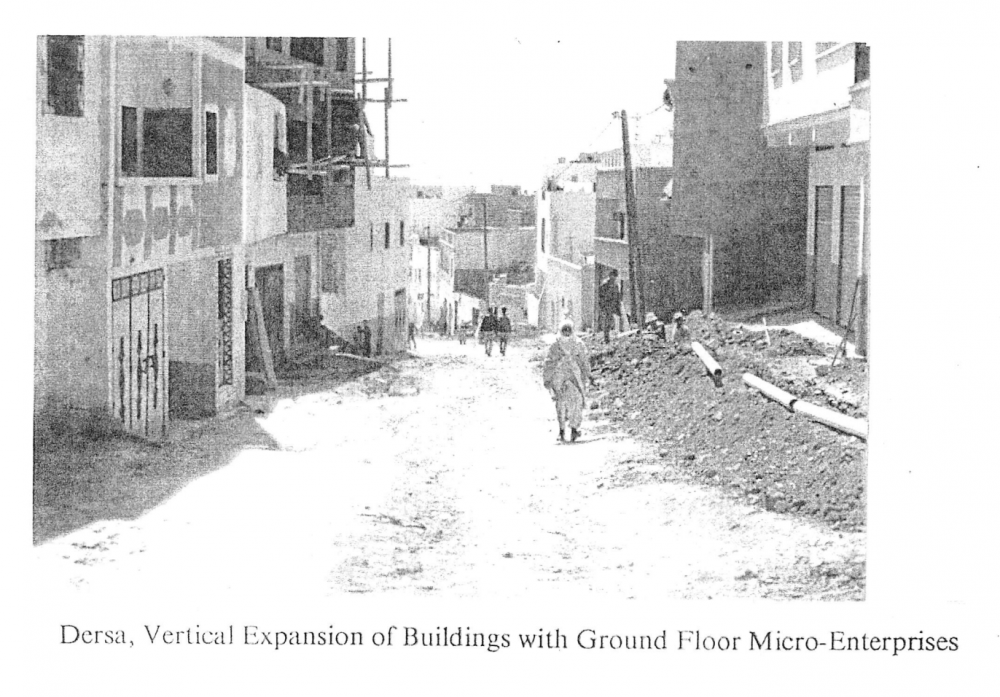
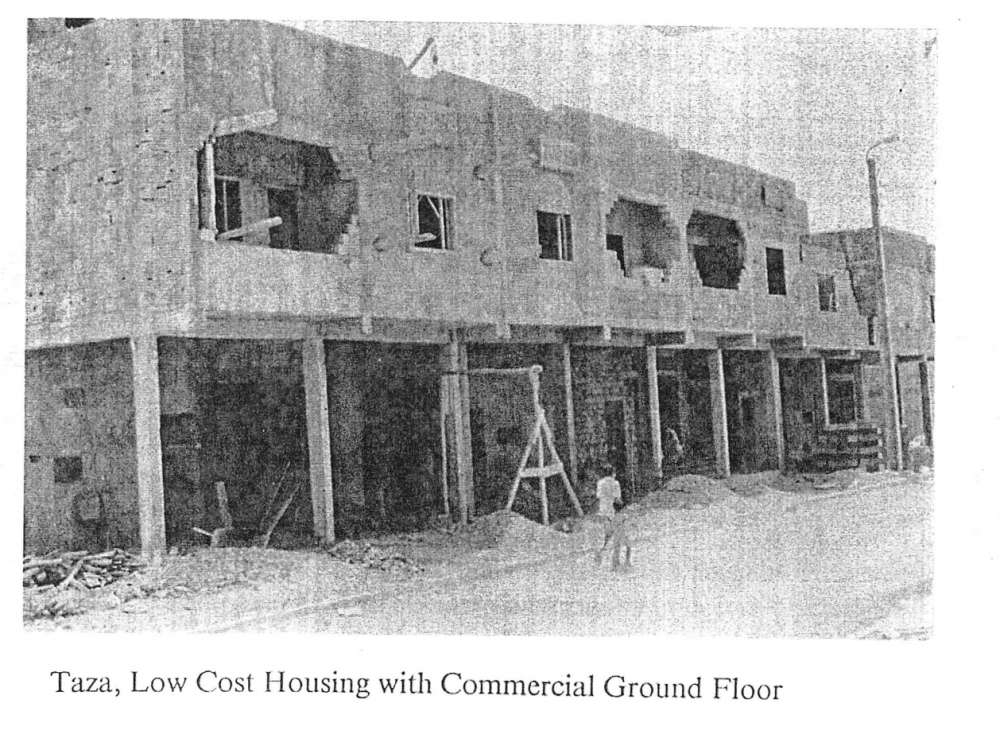 Taza, Low Cost Housing with Commercial Ground Floor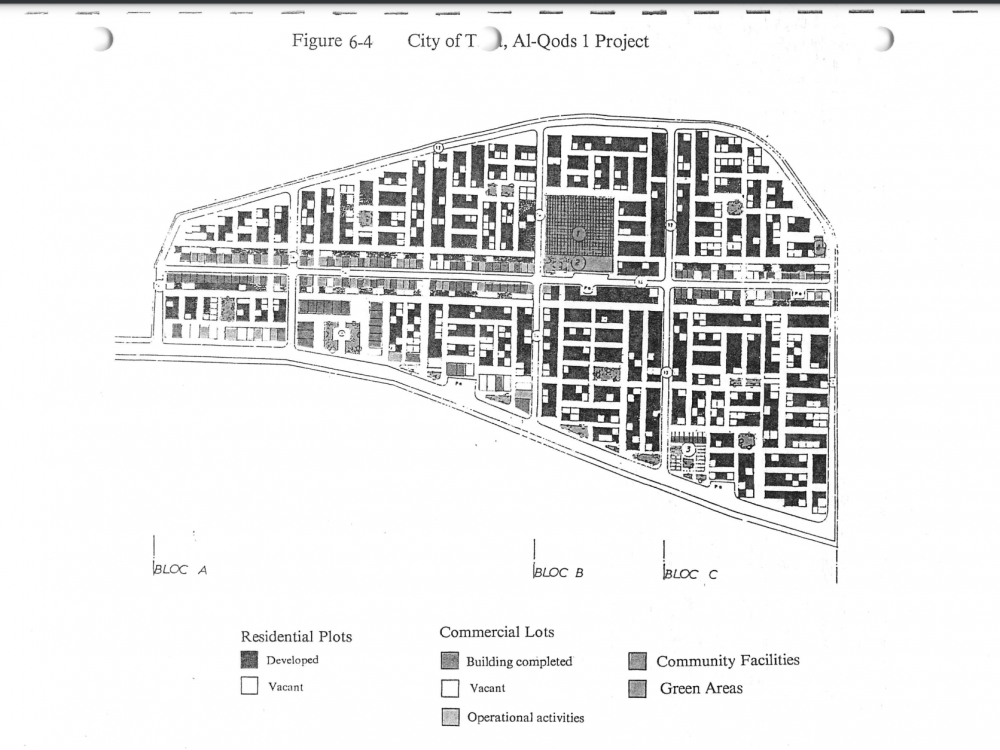
Figure 6-4 City of Taza, Al-Qods 1 Project “Residential Plots, Commercial Lots, Community Facilities, Green Areas”
See related I2UD projects below
| Project Year: | 1992 |
| Project Type: | Report |
| Geographic Regions: | Morocco |
| Reports: | |
| Authors: | Samir Kanoun (TSS, Inc.); Mona Serageldin |
| Sponsors: | USAID Office of Housing and Urban Programs; International City/County Management Association (ICMA) |
| Categories: | Informal Settlements and Urban Upgrading |
| ID: | 1992_00_004 |
Related I2UD Projects
Related by: Housing
- ITP 1988: “Housing Affordability: Project Appraisal and Program Structure,” with Boston Redevelopment Authority Site Visit (Project ID: 1988_00_002)
- Design Studio 1989: “Rabat’s Urban Fringe,” Urbanization Analysis of Rabat, Morocco, Seminar Curriculum (Project ID: 1989_01_001)
- “Environmental Health Factors in Housing,” Design Study for the Rapid Urbanization of Low-Income Settlements in Urban-Fringe Districts (Project ID: 1989_07_001)
- “Second Urban Project,” Urban Development Study Proposals for Conakry, Republic of Guinea (Project ID: 1990_01_002)
- “Strategy for Technical Assistance and Training: Housing and Land Management in Poland,” Technical Assistance Report by Mona Serageldin (Project ID: 1992_00_001)
- “Review of Ongoing USAID Shelter Sector Activities in Morocco,” Report by Mona Serageldin for USAID/Morocco Office of Housing and Urban Programs, 1992-1998 (Project ID: 1992_00_004)
- Design Studio 1993: “Rabat’s Urban Fringe,” Rabat, Morocco, Seminar Curriculum (Project ID: 1993_00_001)
- “The Use of Land and Infrastructure in the Self-Improvement Strategies of Urban Lower Income Families,” Paper by Mona Serageldin, UN-Habitat Fourteenth Commission Report (Project ID: 1993_05_001)
- Design Studio 1994: “A New Urban Center for Adjame, Abidjan, Ivory Coast,” Seminar Curriculum (Project ID: 1994_01_001)
- Design Studio 1995: “Urban Regeneration and Housing in a Transitional Economy: Lublin, Poland,” Seminar Curriculum (Project ID: 1995_00_001)
- “Community-Based Urbanization and Favelas Rehabilitation Processes,” Case Study for Fortaleza, Brazil (Project ID: 1995_00_006)
- “Community Based Credit for Housing, Infrastructure, and Microenterprises,” Micro-Finance Housing Shortage Study for Quito, Ecuador (Project ID: 1995_03_003)
- Design Studio 1996: “Strategic Urban Redevelopment in a Transitional Economy in Gdansk, Poland,” Seminar Curriculum (Project ID: 1996_01_001)
- ITP 1997: “South Boston Metropolitan Area Community Housing,” Case Studies from Boston, Massachusetts (Project ID: 1997_00_002)
- City of Boston’s “Neighborhood Partnership Initiative” & “Main Street Program,” Urban Revitalization for Roslindale and West Roxbury, Boston, United States (Project ID: 1997_05_001)
- “Housing Microfinance Initiatives,” Case Study for USAID Microenterprise Best Practices Initiative, 1999-2000 (Project ID: 1999_00_001)
- “Migration, Remittances and Housing in Sub-Saharan Africa,” Study on Senegal, Kenya, and South Africa with SIDA, 2007-2008 (Project ID: 2007_07_001)
- Executive Education Program 2007: “Strategic Planning for Sustainable Human Settlements,” Pretoria, South Africa (Project ID: 2007_11_001)
- “Improvement Strategies for Affordable Housing in Yerevan, Armenia,” Development Strategy (Project ID: 2008_01_001)
- “Township Development Strategy for Emfuleni Municipality,” Technical Assistance to Sedibeng, Gauteng, South Africa (Project ID: 2009_03_001)
- ICLRD: Urban Reconciliation Case Studies for Public Housing Estates in Ireland and Northern Ireland, with Study Profile on the Basel Metropolitan Area, 2010-2012 (Project ID: 2010_05_001)
- UN-Habitat Spatial Regional Plan and Assessment for the Kurdistan-Iraq Region Housing Program (Project ID: 2014_06_001)