
Abstract
In 2015, a team from I2UD contributed to the Planning for Climate Adaptation Program of the International City/County Management Association (ICMA) and USAID, working with four municipalities in the Dominican Republic: Santo Domingo National District, Santiago de los Caballeros, San Pedro de Macorís, and Las Terrenas.
The projects focused on three main objectives:
- Improving the technical and management capacity of municipal planners;
- Incorporating climate change adaptation considerations into the municipal planning process; and
- Supporting the scale-up of climate resilient land use planning best practices to other municipalities in the Dominican Republic.
Documents include two official reports, an overview of I2UD’s involvement including curriculum, case studies, and scope of work, and NOAH case study and timeline.
See related I2UD projects below
| Project Year: | 2015-2016 |
| Project Type: | Risk Assessment and Local Development Strategy |
| Geographic Regions: | Dominican Republic |
| Reports: |
|
| Authors: | François Vigier; John Driscoll; Oriol Monfort; Jim Kostaras; Alejandra Mortarini; Barbara Summers |
| Sponsors: | USAID; International City/County Management Association (ICMA) |
| Categories: | Climate Change and Resilience Building |
| ID: | 2015_10_002 |
Related I2UD Projects
I2UD Digital Library Study Guide: Climate Adaptation and Resilience
I2UD Digital Library Study Guide: Urban Climate Adaptation and Resilience: Planning for Equitable and Inclusive Cities, March 2026
- “Environmental Health Factors in Housing,” Design Study for the Rapid Urbanization of Low-Income Settlements in Urban-Fringe Districts (Project ID: 1989_07_001)
- “Indicators of Performance for Local Development,” Case Study on the LITMUS Programme of Southwark, London (Project ID: 2001_09_003)
- “Climate Change in the Local Development Agenda: Promoting Resilience Through Enhanced Understanding of Early Threats,” Report on Alexandria, Egypt and Cotonou, Benin, 5th World Bank Urban Research Symposium (Project ID: 2009_00_002)
- “Strategic Land Use Planning for Climate Change-Driven Water Shortages in El Alto, Bolivia” (Project ID: 2011_10_001)
- “Climate Change Adaptation and Resiliency Framework,” Development Strategy for Cartagena, Colombia and Condega, Nicaragua (Project ID: 2012_10_001)
- “Belize Municipal Development Plan,” Urban Growth Plans, 2012-2014 (Project ID: 2012_10_003)
- “National Urban Policies in Arab States,” Regional Assessment and Case Studies on NUPs in Egypt, Jordan, Morocco, Saudi Arabia, and Sudan (Project ID: 2014_08_001)
- “National Urban Strategy for Governorates in Iraq,” Development Strategy for Phase II of the United Nations Development Programme (UNDP) and Iraq Ministry of Planning Local Area Development Programme (LADP II), 2014-2018 (Project ID: 2014_11_001)
- “Assessing Alternative Resiliency Strategies in Under-Resourced Coastal Communities in Belize Impacted by Climate Change and Vulnerable to Environmental Risk” (Project ID: 2014_12_001)
- “Arusha City Resilience Index Pilot Program” for the Tanzanian Ministry of Lands, Housing and Human Settlements Development, Arusha, Tanzania (Project ID: 2015_08_001)
- “Exploring the Use of Land Value Capture Instruments for Green Resilient Infrastructure Benefits” (Project ID: 2015_10_001)
- “Planning for Climate Adaptation Program” for Four Dominican Republic Municipalities (Project ID: 2015_10_002)
- “Habitat III Regional Report for the Arab Region,” for UN-Habitat (ROAS) and United Nations (ESCWA) (Project ID: 2015_10_003)
- “Urban Resiliency & the Challenge of Coordinating Climate Adaptation Strategies at Different Scales,” Assessment and Presentation, Zofnass Program for Sustainable Infrastructure (Project ID: 2016_04_001)
Related by: City or Community Case Studies
- “Planning for Climate Adaptation Program” for Four Dominican Republic Municipalities (Project ID: 2015_10_002)
- “National Urban Policies in Arab States,” Regional Assessment and Case Studies on NUPs in Egypt, Jordan, Morocco, Saudi Arabia, and Sudan (Project ID: 2014_08_001)
- “Arusha Urbanization Strategy and Urban Development Plan,” Development Strategy for Arusha Municipality, Tanzania (Project ID: 2012_01_001)
- ICLRD: Urban Reconciliation Case Studies for Public Housing Estates in Ireland and Northern Ireland, with Study Profile on the Basel Metropolitan Area (Project ID: 2010_05_001)
- Executive Training Course 2006: “Strategic Planning for Sustainable Infrastructure Development,” Workshop Curriculum with Case Studies, Pretoria, South Africa (Project ID: 2006_11_001)
- IEP 2003: “Infrastructure and Partnerships for Local Economic Development” in Pretoria and Bloemfontein, South Africa (Project ID: 2003_08_001)
- IEP 2002: “Strategic Planning for Local Development & Urban Revitalization,” Program Overview (Project ID: 2002_01_001)
- “Indicators of Performance for Local Development,” Case Study on the LITMUS Programme by the Borough of Southwark, London, 2001 (Project ID: 2001_09_003)
- Workshops on “Strategic Planning and Management of Municipal Infrastructure Programs,” from Review of Grant-Funded MIPs in South Africa (Project ID: 1999_05_002)
- “Housing Microfinance Initiatives,” Case Study for USAID Microenterprise Best Practices Initiative (Project ID: 1999_00_001)
- ITP 1998: “The Role of Public/Private Partnerships in Urban Improvements,” with Case Studies on Kreuzberg, Berlin (Germany), GIS Mapping on Cape Cod (US), and the Maarouf Quarter of Cairo (Egypt) (Project ID: 1998_07_001)
- “City of Szczecin Capital Improvement Program,” Case Studies for Technical Assistance Program, Szczecin, Poland (Project ID: 1996_06_002)
- ITP 1994: “Revitalization in Older Urban Spaces,” Upham’s Corner, Dorchester, Boston, South Boston, and New Haven (US); Montpellier (France); and Cork (Ireland) with Case Studies (Project ID: 1994_07_001)
- “Introduction to Local Finances,” Teaching Monographs and Case Studies on Finance Management, 1994-1999 (Project ID: 1994_07_002)
- “Regularizing the Informal Land Development Process,” International Case Studies for the USAID Office of Housing and Urban Programs, Mona Serageldin (Project ID: 1990_10_001)
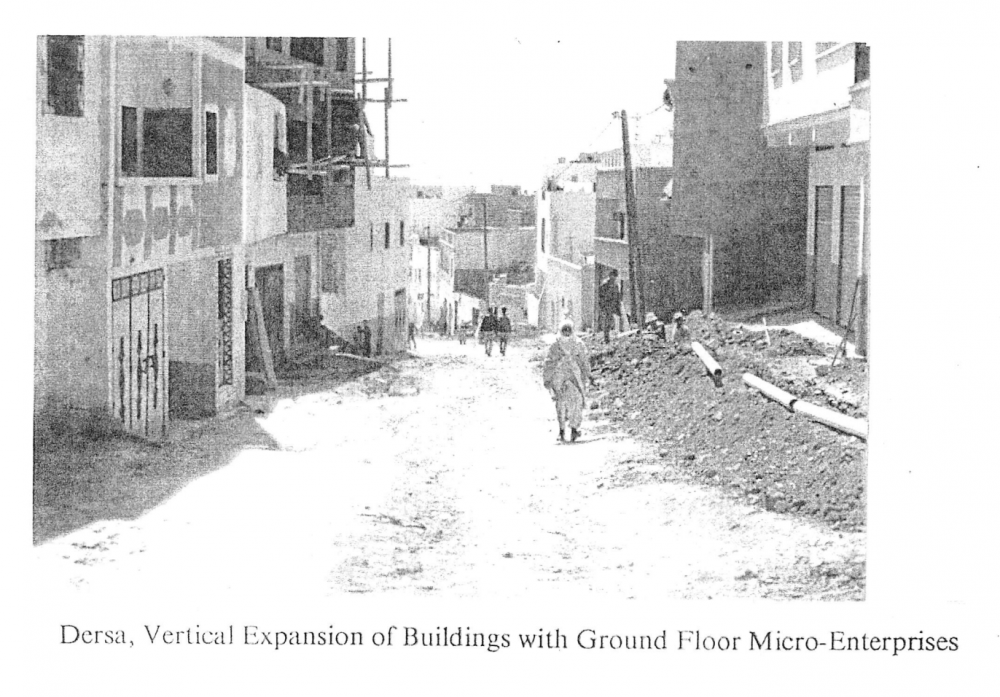
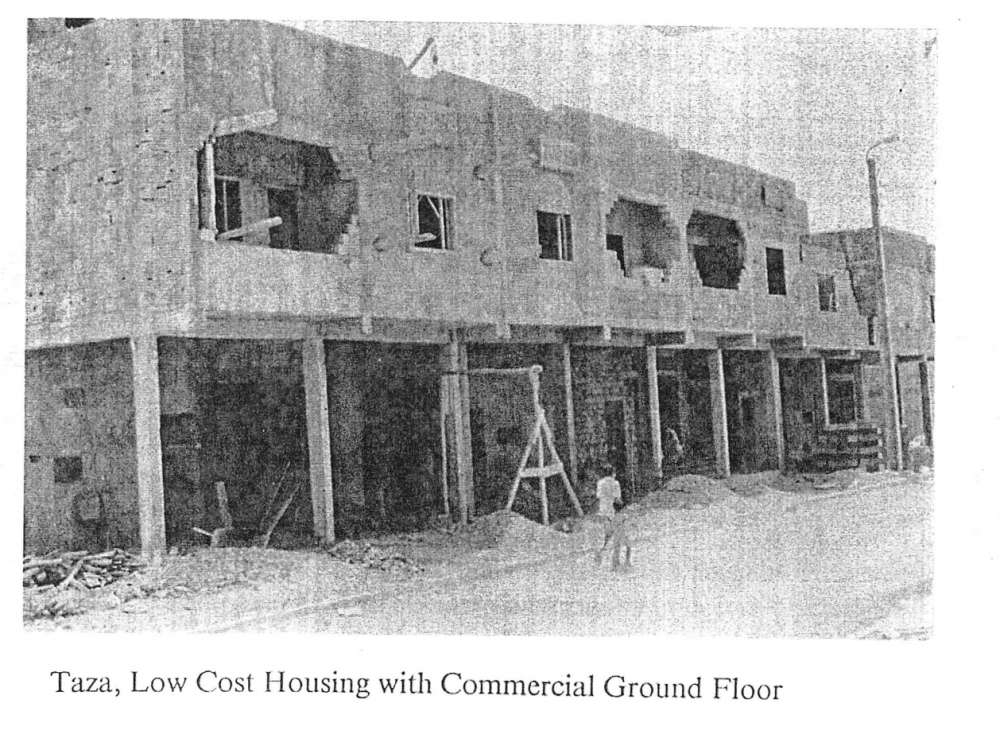 Taza, Low Cost Housing with Commercial Ground Floor