
Abstract
Mona Serageldin prepared the keynote presentation “The Dynamics of Neighborhood Transformation Long Term Trends and Immediate Responses to Turmoil and Civil Unrest” for the 2015 City Debates program on Other Gentrifications: Urban Change Beyond the Core at the American University of Beirut.
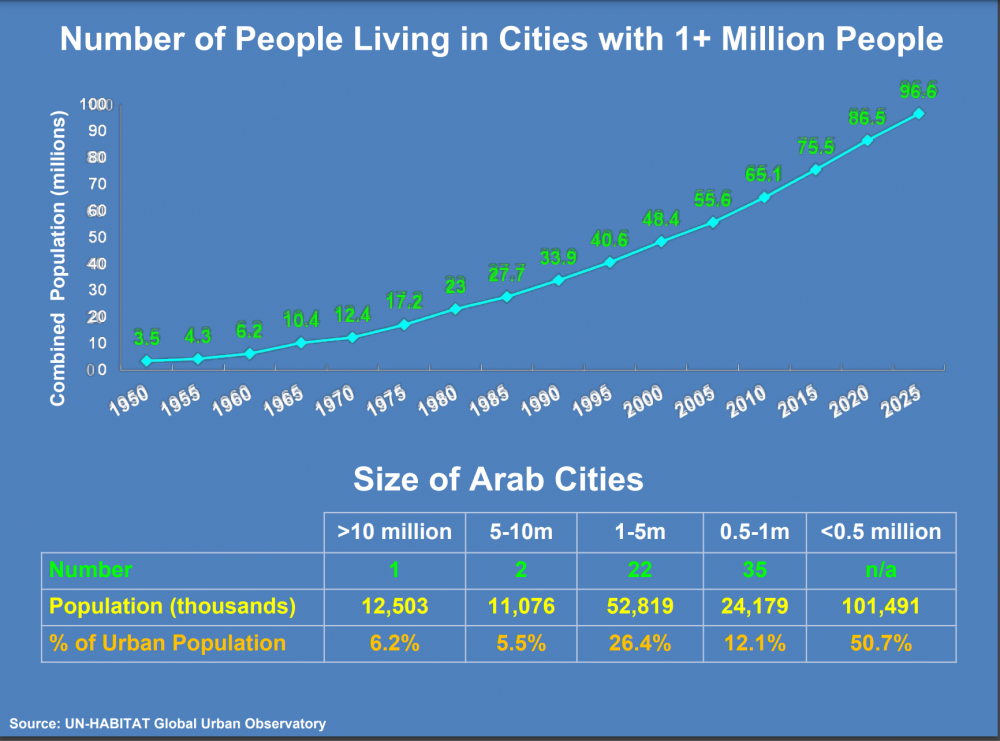
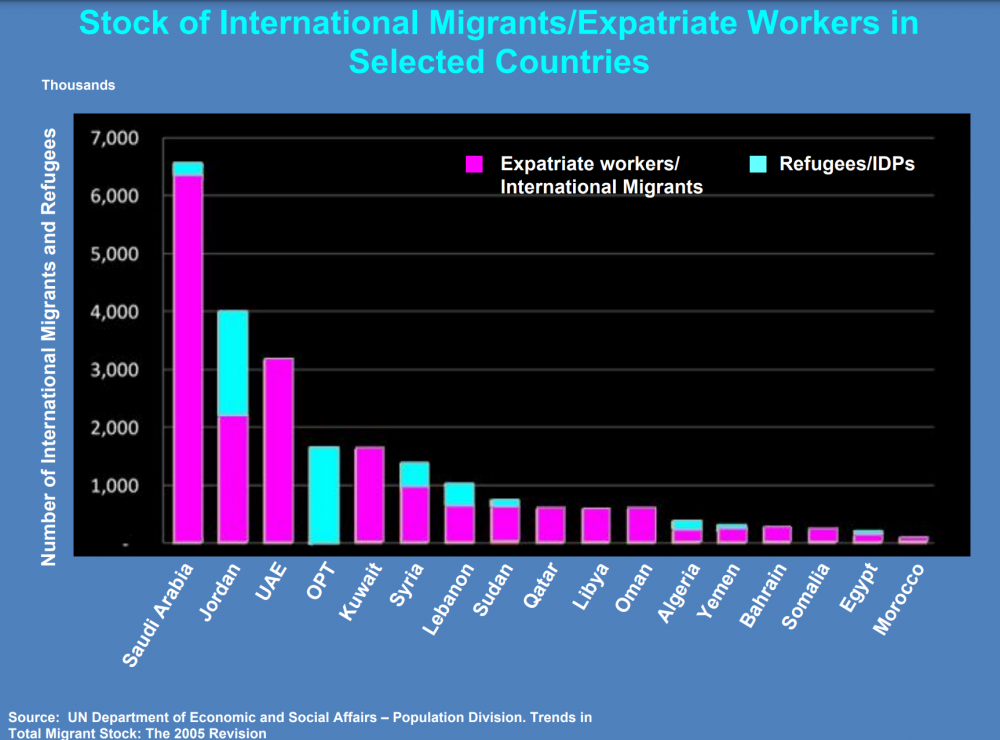
The Keynote speech and presentation by Serageldin examine the impact of spatial segregation and social exclusion on gentrification in the Mashreq countries of Egypt, Syria, Lebanon, Iraq, Palestine, and Jordan. Documents include presentation slides and transcript.
Excerpt
[Excerpt: Key Note text, Dr. Mona Serageldin, Page 1]
“Gentrification, within or outside the urban core, conjures images of forced displacement, eviction and marginalization of poorer segments of society. However, when discussing gentrification it is important to distinguish between spatial segregation and social exclusion and between diversity and social mixity. Each of these concepts involves a different perspective on urban space. Furthermore, except in cases of clearance and redevelopment, changes in the structure and morphology of urban areas, entail longer term processes which start slowly, accelerate and reach a tipping point. Taking into consideration the time frame often alters perspectives and viewpoints.”
“Social and economic change at the neighborhood level is an inherent component of urban growth. Over time, the regional context has shaped the drivers of transformation processes. Historically, ruling elites eager to display their power, wealth, and status built exclusive precincts outside the urbanized area inhabited by the commoners, a diverse population with a wide range of economic means and social standing including different ethnicities and religions. Later, the desire of colonial expatriate communities to replicate their own living environment introduced a trend towards exclusive suburban extensions. The regulatory controls included in the charters and by laws of the companies which developed these suburbs and the boards running the select amenities tended to collapse from the mid-1960s on as the colonial era came to an end and massive capital infusion in urban real estate altered the dynamics of growth.”
“In labor sending countries, remittance-driven urbanization, formal and informal, sustained by high rates of household formation and pervasive housing shortages, sent land values skyrocketing beyond the affordability of many among the middle classes. It accelerated the proliferation and subsequent densification of informal settlements and sharpened class differentiation within them.”
See related I2UD projects below
| Project Year: | 2015 |
| Project Type: | Presentation |
| Geographic Regions: | Beirut, Lebanon (Program Location) / Egypt / Syria / Lebanon / Iraq / Palestine / Jordan |
| Reports: | |
| Authors: | Mona Serageldin; Barbara Summers |
| Sponsors: | American University of Beirut |
| Categories: | Informal Settlements and Urban Upgrading |
| ID: | 2015_03_001 |
Related I2UD Projects
I2UD Digital Library Study Guide: Post-Conflict Reconciliation
I2UD Digital Library Study Guide: The Role of Urban Planning and Management in Post-Crisis Reconciliation and Recovery, October 2025
- “Strategy for Technical Assistance and Training: Housing and Land Management in Poland,” Technical Assistance Report by Mona Serageldin (Project ID: 1992_00_001)
- “Framework for Land Management and Urban Development in a Market Economy,” Mission Report with Case Studies Annexes, for Tirana, Albania (Project ID: 1994_00_001)
- “Lublin Local Initiatives Program” & “Lublin Old Town Rehabilitation Project,” Technical Assistance for Urban Upgrading in Lublin, Poland, 1994-2000 (Project ID: 1994_08_001)
- Design Studio 1995: “Urban Regeneration and Housing in a Transitional Economy: Lublin, Poland,” Seminar Curriculum (Project ID: 1995_00_001)
- Design Studio 1996: “Strategic Urban Redevelopment in a Transitional Economy in Gdansk, Poland,” Seminar Curriculum (Project ID: 1996_01_001)
- “City of Szczecin Capital Improvement Program,” Case Studies for Technical Assistance Program, Szczecin, Poland (Project ID: 1996_06_002)
- “Review of the South African Government’s Grant-Funded Municipal Infrastructure Programs,” Technical Reports, 1998-1999 (Project ID: 1998_08_001)
- “Preserving the Historic Urban Fabric in a Context of Fast Paced Change,” Cultural Heritage Essay by Mona Serageldin (Project ID: 1998_11_001)
- “Szczecin Local Initiative Program,” Urban Improvement Intervention Strategy, USAID Regional Housing and Urban Development Office, Szczecin, Poland (Project ID: 1999_05_001)
- Workshops on “Strategic Planning and Management of Municipal Infrastructure Programs,” Review of Grant-Funded MIPs in South Africa (Project ID: 1999_05_002)
- “Reconnaissance Report: Local Economic Development,” Regional Planning Survey for Bucharest, Romania (Project ID: 2000_02_001)
- IEP October 2000: “Seminar on Strategic Planning for Urban Revitalization and Local Development” in Pretoria, South Africa (Project ID: 2000_10_001)
- IEP May 2001: “Infrastructure Planning and Partnerships for Local Economic Development,” Eastern Cape, South Africa (Project ID: 2001_05_001)
- IEP August 2001: “Infrastructure Planning and Partnerships for Local Economic Development,” Pretoria, South Africa (Project ID: 2001_08_003)
- “Svishtov: A Community-Based Investment Program for Municipal Development,” Technical Assistance for Capital Investment Strategy in Svishtov, Bulgaria (Project ID: 2002_03_001)
- ICLRD: Annual Conference Reports on Urban Planning for the Island of Ireland, 2004-2017 (Project ID: 2004_05_001)
- “Cooperation and Capacity Building for Promoting Cultural, Natural and Built Heritage in Transylvania,” Technical Assistance Report, Romania (Project ID: 2004_09_001)
- “Continuity and Change” by Mona Serageldin, Topic Paper for 48th World Congress, International Federation for Housing and Planning (IFHP) (Project ID: 2004_09_002)
- “Romania Local Governance Bridge Program – Metropolitan Planning and Cooperation in Romania,” USAID-ROMANIA Report (Project ID: 2005_07_001)
- ICLRD: Spatial Strategies for Peace and Reconciliation on the Island of Ireland – Collected Reports by the International Centre for Local & Regional Development, 2006-2013 (Project ID: 2006_06_001)
- “The Atlas of the Island of Ireland: Mapping Social and Economic Change,” Publication by ICLRD, 2008 and 2015 (Project ID: 2008_00_001)
- “Shaping and Managing Cross-Border Development,” ICLRD Executive Training Program Materials for Irish Border Cities, 2010-2014 (Project ID: 2009_00_004)
- ICLRD: Urban Reconciliation Case Studies for Public Housing Estates in Ireland and Northern Ireland, 2010-2012 (Project ID: 2010_05_001)
- “Borderlands: The Journal of Spatial Planning in Ireland,” ICLRD Publication, 2011, 2013 (Project ID: 2011_00_001)
- “Technical Assistance to Lesedi Local Municipality,” Design Framework for South Africa’s Neighborhood Development Partnership Grant, Gauteng Province, South Africa (Project ID: 2011_08_001)
- ICLRD Briefing Papers 2012-2016: “Implementation of River Basin Management Plans,” “Fit for the Future: Organisational Change and Development,” and “Applying the Functional Territories Concept: Planning Beyond Borders” (Project ID: 2012_00_001)
- “The Unplanned Areas Upgrading and Employment Enhancing Programme in Egypt,” Needs Assessment and Activity Design Study for Informal Settlements, 2011-2016 (Project ID: 2012_10_004)
- World Bank MNA Urban Action Plan, Policy and Strategy Papers: “The Evolving Regional Urban Agenda: Key Challenges and Opportunities” and “From Spring to Renaissance: Repositioning the Arab Cities” (Project ID: 2013_01_001)
- UN-Habitat Spatial Regional Plan and Assessment for the Kurdistan-Iraq Region Housing Program (Project ID: 2014_06_001)
- “Economy of Historic Preservation” in Erbil, Kurdistan: Strengthening Urban & Regional Planning (SURP), UN-Habitat (Project ID: 2014_06_002)
- “World Migration Report,” Background Papers on Displacement, Migration, and Resettlement in MENA, International Organization for Migration (Project ID: 2014_09_001)
- “National Urban Strategy for Governorates in Iraq,” Development Strategy for Phase II of the United Nations Development Programme (UNDP) and Iraq Ministry of Planning Local Area Development Programme (LADP II), 2014-2018 (Project ID: 2014_11_001)
- Keynote for City Debates 2015, American University of Beirut: “The Dynamics of Neighborhood Transformation: Long Term Trends and Immediate Responses to Turmoil and Civil Unrest,” Mona Serageldin (Project ID: 2015_03_001)
- “Habitat III Regional Report for the Arab Region,” for UN-Habitat (ROAS) and United Nations (ESCWA), 2015-2016 (Project ID: 2015_10_003)
- “Integrated Development Plan in Support of the Socio-Economic Integration of Former Burundian Refugees in Tanzania,” Technical Assistance (Project ID: 2015_11_001)
- “Local Aspects of Humanitarian Response to Transit Migrants and Refugees in Croatia” (Project ID: 2016_01_001)
Related by: MENA International Programs
- Design Studio 1984: “The Revitalization of a Traditional Urban Quarter” for the Medieval Darb al Ahmar District, Cairo, Egypt, Seminar Curriculum (Project ID: 1984_01_001)
- “Urban Strategies for Economic Development: Towards an Agenda for the 90s,” Regional Report and Workshop for Amman, Jordan (Project ID: 1987_09_001)
- “Best Practices and Local Leadership Programme,” Review of International Urban Development Projects, for the United Nations Centre for Human Settlements (UN-Habitat) (Project ID: 1995_00_007)
- “Comprehensive Plan for Makkah, Madinah and Mashaer,” Urban Development Strategy for Ancient Holy Sites in Saudi Arabia (Project ID: 2009_04_001)
- State of Arab Cities, UN-Habitat Report & Conference, “Challenges of Urban Transition: Municipal Management and Urban Development Conference for Sustainability in Arab States” (Project ID: 2010_07_001)
- “GCC Regional Spatial Strategy – Elements and Considerations,” Urban Development Plan, UN-Habitat Gulf States Regional Office Workshops (Project ID: 2010_10_001)
- World Bank MNA Urban Action Plan – Policy and Strategy Papers: “The Evolving Regional Urban Agenda: Key Challenges and Opportunities” and “From Spring to Renaissance: Repositioning the Arab Cities” (Project ID: 2013_01_001)
- “Basic Services for an Urbanizing World,” Third Global Report on Local Democracy and Decentralization (GOLD III, UCLG). Chapter on “Middle East and West Asia” by Mona Serageldin, I2UD (Project ID: 2013_02_001)
- “Inclusive Cities and Access to Land, Housing, and Services in Developing Countries,” Urban Development Series, 2016, World Bank (Project ID: 2014_04_001)
- UN-Habitat Spatial Regional Plan and Assessment for the Kurdistan-Iraq Region Housing Program (Project ID: 2014_06_001)
- “World Migration Report,” Background Papers on Displacement, Migration and Resettlement in MENA, International Organization for Migration (Project ID: 2014_09_001)
- “National Urban Strategy for Governorates in Iraq,” Development Strategy for Phase II of the United Nations Development Programme (UNDP) and Iraq Ministry of Planning Local Area Development Programme (LADP II), 2014-2018 (Project ID: 2014_11_001)
- Keynote for City Debates 2015, American University of Beirut: “The Dynamics of Neighborhood Transformation: Long Term Trends and Immediate Responses to Turmoil and Civil Unrest,” Mona Serageldin (Project ID: 2015_03_001)
- Habitat III Regional Report for the Arab Region: Papers on “Inclusive cities,” “Migration and Refugees in Urban Areas,” and “Land Structure, Process, and Outcome” (Project ID: 2015_10_003)
Related by: Migration
- “Community-Based Urbanization and Favelas Rehabilitation Processes,” Case Study in Academy Editions, Architecture of Empowerment: People, Shelter and Livable Cities, for Fortaleza, Brazil (Project ID: 1995_00_006)
- “Migratory Flows, Poverty and Social Inclusion in Latin America,” Research Report by Mona Serageldin with Swedish International Development Agency (SIDA) (Project ID: 2004_02_001)
- “Development Corridors and Urban Development Strategies” and “Slum Improvement Strategies and Social Inclusion,” Presentations by Mona Serageldin, 11th United Nations Conference, São Paulo, Brazil (Project ID: 2004_06_001)
- “Migration, Remittances and Housing in Sub-Saharan Africa,” Study on Senegal, Kenya, and South Africa, with the Swedish International Development Cooperation Agency (SIDA) (Project ID: 2007_07_001)
- “Migration, Remittances and the Empowerment of Women in Central America and the Andean Region,” for PROMESHA, Lund University (Project ID: 2007_07_002)
- “World Migration Report,” Background Papers on Displacement, Migration, and Resettlement in MENA, International Organization for Migration (Project ID: 2014_09_001)
- “Integrated Development Plan in Support of the Socio-Economic Integration of Former Burundian Refugees in Tanzania,” Technical Assistance (Project ID: 2015_11_001)
Related I2UD Photograph Galleries